Why you cannot switch off at night
If your mind races the moment your head touches the pillow, the problem did not start at bedtime. It started during the day. A nervous system that has been running on stress since morning does not have an off switch; it arrives at night still scanning, still solving, still braced. Lying in the dark simply removes the distractions that were masking it.
That is why so much sleep advice disappoints. Blackout blinds, supplements and sleep apps all work on the night itself, while the real cause, a body too stressed to stand down, goes untouched.
Why sleep meditations only soothe the symptom
Guided sleep meditations, Yoga Nidra and rain sounds can genuinely help you drift off, and there is nothing wrong with using them. But notice what they are doing: sedating an over-stimulated system in the moment. The next night the system is just as wired, so you need them again. They become a crutch rather than a cure.
Vedic meditation works a level deeper, and at a different time of day. By clearing stress in the morning and late afternoon, it lowers the level of charge the nervous system carries into the evening. You are not trying to calm down at 11pm; you arrive at 11pm already calm. Sleep stops being a fight.
The rhythm: meditate in the day, sleep at night
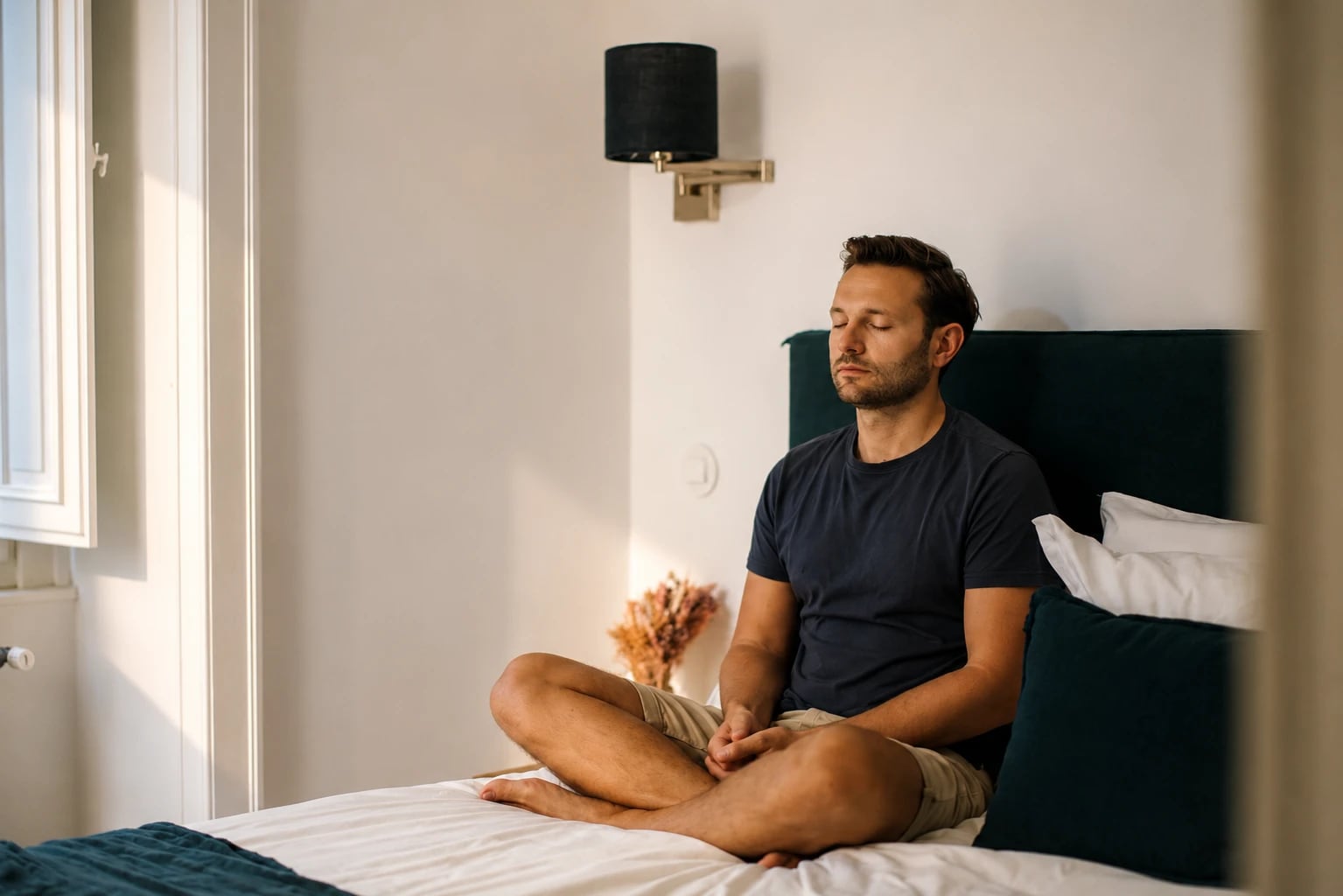
The practice is twenty minutes, twice a day, sitting comfortably with your eyes closed and effortlessly thinking a personal mantra. The second sitting, in the late afternoon or early evening, matters most for sleep: it dissolves the day's accumulated stress instead of letting you carry it to bed.
During meditation the body drops into a rest deeper than sleep, which also takes pressure off the night itself. Meditators commonly find they fall asleep faster, wake less, and need slightly less sleep to feel genuinely rested, because the sleep they get is doing repair rather than stress processing.
Meditation and insomnia
Long-term insomnia usually has a loop at its centre: stress disturbs sleep, broken sleep raises stress, and the bed itself becomes a place the body associates with struggle. A daily meditation practice attacks the loop at both ends, lowering the stress that disturbs sleep and giving the body a daily experience of deep rest that rebuilds its trust in switching off.
If insomnia is severe or long-standing, meditation works best alongside proper care, such as your GP or a CBT-i programme, not instead of it. And do not change sleep medication without medical advice.
Meditation supports wellbeing but is not a substitute for medical care. If poor sleep is seriously affecting your health, please also speak to a qualified professional. You can read more about what Vedic meditation is and the full range of benefits.